Case Studies

Projects & Case Studies

Enterprise Wi-Fi, fiber backbone, integrated security, and multi-site technology deployments — delivered under KTS project management, QA, and documentation standards.

Local Execution. National Capability. Headquartered in Alberta with active resources across Canada, KTS supports single-site, multi-site, and remote technology deployments nationwide.

Client confidentiality. Many of our clients operate under confidentiality and site security requirements. Where a client cannot be named, projects are described by industry, scale, and region. References and detailed project documentation are available on request during the consultation process.

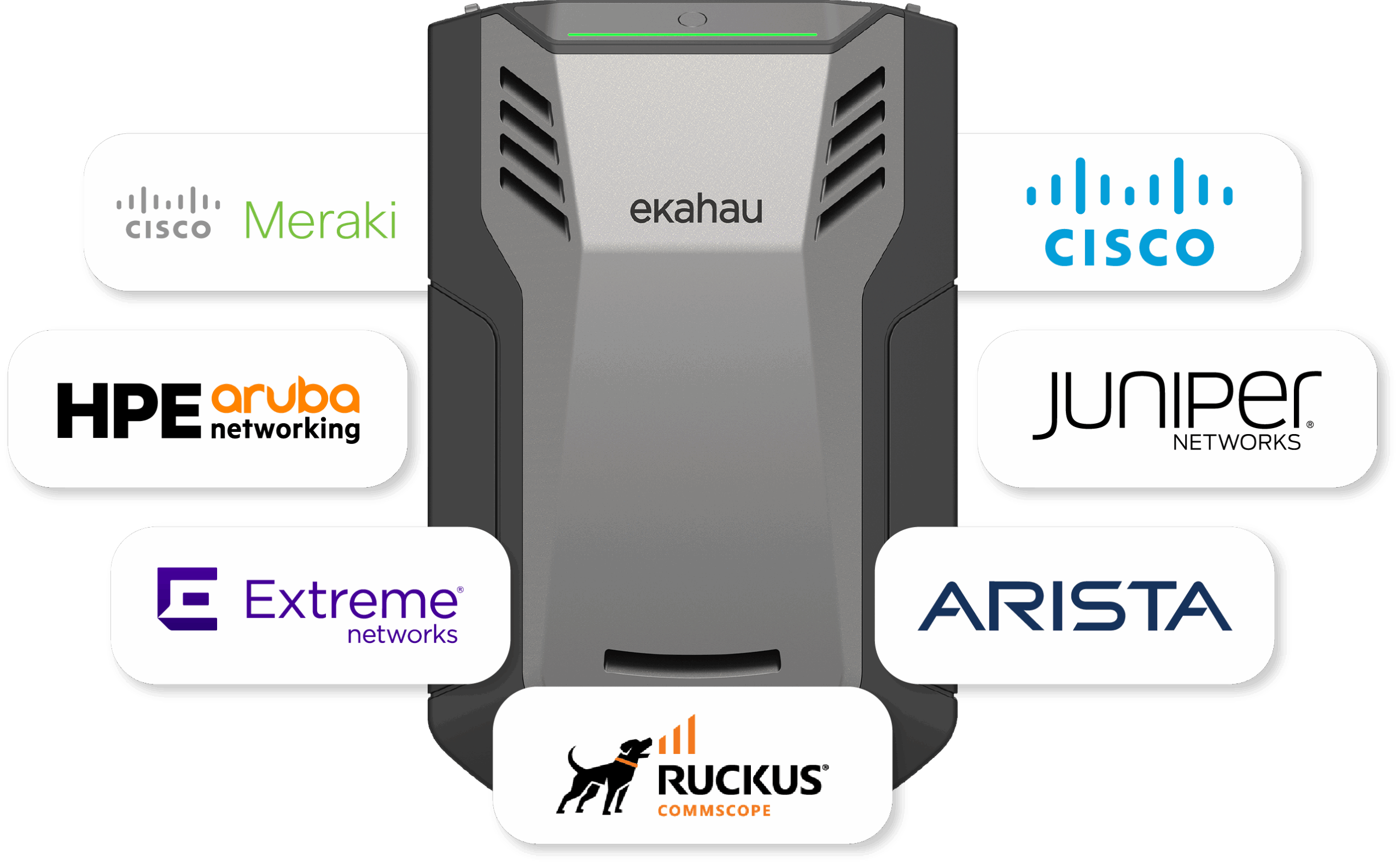
Ekahau wireless survey and predictive Wi-Fi design used by KTS Solutions for enterprise Wi-Fi deployment planning
Enterprise Wi-Fi

Enterprise Wi-Fi Deployment

Client
Multi-Property Hospitality Group
Industry
Enterprise Wi-Fi
Region
Alberta

The Challenge

Guest and staff wireless coverage was inconsistent across guest rooms, corridors, and common areas. Dead zones generated repeat guest complaints, and a single flat network meant guest traffic, staff devices, and point-of-sale systems all competed for the same bandwidth with no separation.

Scope of Work

  • Predictive Wi-Fi design and on-site wireless survey
  • Access point placement and mounting design per floor
  • Structured cabling to every new access point location
  • Network segmentation for guest, staff, POS, and building systems
  • Switching and controller configuration
  • Post-installation validation survey and documentation

Technology & Services Used

  • Ekahau predictive design and validation surveys
  • Cisco Meraki and Ubiquiti UniFi wireless
  • Cat6 / Cat6A structured cabling
  • Panduit and Leviton termination hardware
  • VLAN segmentation and bandwidth management
  • Fluke DSX1800 certification testing

The KTS Solution

KTS started with a predictive design in Ekahau, then validated it on site before a single cable was pulled — confirming telecom room locations, cable pathways, mounting positions, and real-world coverage against the model. Access points were placed for density and clean roaming at peak occupancy rather than simply spaced evenly. Traffic was then segmented so guest usage could never degrade staff operations or payment systems, and a post-installation survey verified the delivered coverage matched the design.

Project Results

Verified wireless coverage across guest rooms, corridors, and common areas

Guest, staff, POS, and building systems separated onto isolated network segments

Stable roaming maintained at peak occupancy

As-built drawings and certified test results issued at turnover

Structured cabling and network rack installation by KTS Solutions for a workforce accommodation technology upgrade
Workforce Accommodations

Workforce Accommodation Technology Upgrade

Client
Major Canadian Oil & Gas Producer
Industry
Workforce Accommodations
Region
Northern Alberta

The Challenge

A remote workforce accommodation site was running on aging infrastructure that could not support current occupancy. Residents streaming and video-calling home saturated the available bandwidth, operational systems shared the same network as recreational traffic, and any outage meant a long response window given the site's location.

Scope of Work

  • Site assessment of existing cabling, pathways, and telecom rooms
  • Bandwidth and capacity planning against occupancy and device counts
  • Fiber backbone between accommodation buildings
  • Enterprise Wi-Fi refresh across resident and operational areas
  • Network segmentation for resident, staff, and security traffic
  • Redundancy and failover configuration

Technology & Services Used

  • Corning fiber backbone with OTDR-verified splicing
  • Enterprise switching and cloud-managed access points
  • Ekahau coverage design for high-density occupancy
  • Traffic segmentation and bandwidth management
  • Dual-WAN automatic failover
  • APC Smart-UPS backup power

The KTS Solution

KTS assessed the site against actual occupancy and device density rather than floor area, then designed for realistic peak load — streaming, video calls, and work applications running at the same time. A fiber backbone was installed between buildings with enterprise switching and access points sized for density. Resident, staff, and security traffic were segmented so recreational use could not affect operations, and dual-path internet with automatic failover was configured to keep the site online. Material staging and crew travel were planned around the site's remote access and permit requirements.

Project Results

Capacity sized to actual peak occupancy rather than building footprint

Resident recreational traffic isolated from operational and security systems

Automatic failover in place to protect against single-path outages

Remote monitoring enabled so issues are identified without a site visit

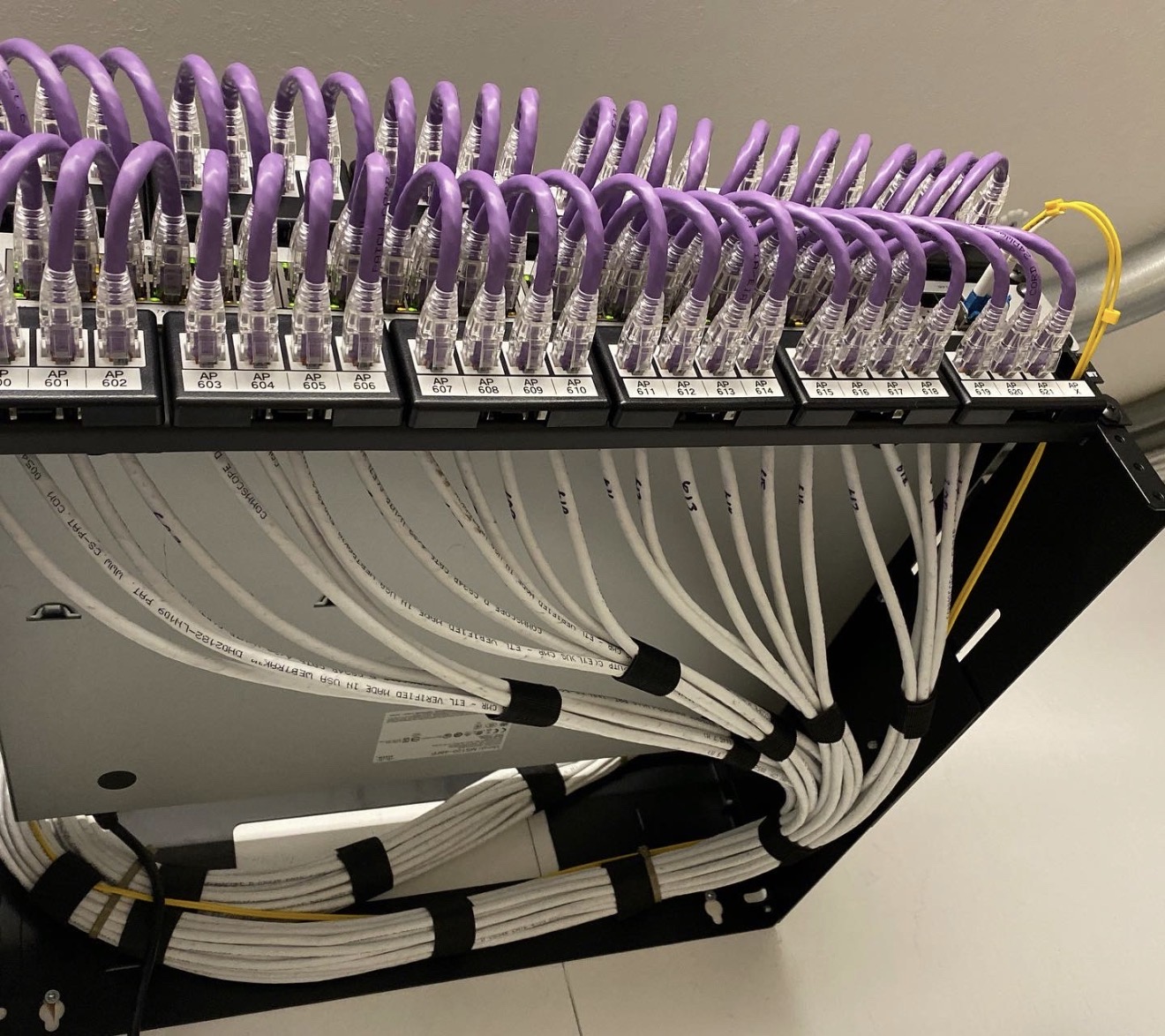
Network infrastructure and switching deployment by KTS Solutions for a multi-site retail technology rollout
Multi-Site Rollout

Multi-Site Retail Rollout

Client
National Retail Chain
Industry
Multi-Site Rollout
Region
Western and Central Canada

The Challenge

Each location had been built by a different local contractor over several years. Cabling standards, labelling, hardware, and documentation varied site to site, which made support slow and unpredictable — every service call started with working out how that particular store had been wired.

Scope of Work

  • Standardized site design template applied across all locations
  • Structured cabling, racks, and switching per location
  • Wireless coverage for staff devices and customer Wi-Fi
  • Point-of-sale network segmentation
  • Consistent labelling and documentation standard
  • Staged crew scheduling to limit disruption to trading hours

Technology & Services Used

  • Cat6 / Cat6A structured cabling to a single standard
  • Panduit and Leviton racks and termination hardware
  • Cloud-managed switching and wireless
  • VLAN separation for POS, staff, and customer traffic
  • Standardized labelling and as-built documentation
  • Fluke DSX1800 certification per location

The KTS Solution

KTS built one standard site design and deployed it identically at every location, so a technician arriving at any store finds the same rack layout, the same labelling scheme, and the same documentation. Crews were staggered and scheduled around trading hours to avoid disrupting business. A lead technician was assigned per site to hold quality against the standard, and every location was certified and documented the same way — turning a set of unrelated installations into one supportable estate.

Project Results

Identical infrastructure standard across every location

Support time reduced by removing site-by-site guesswork

Payment systems isolated from customer and staff traffic

Consolidated documentation set covering the full estate

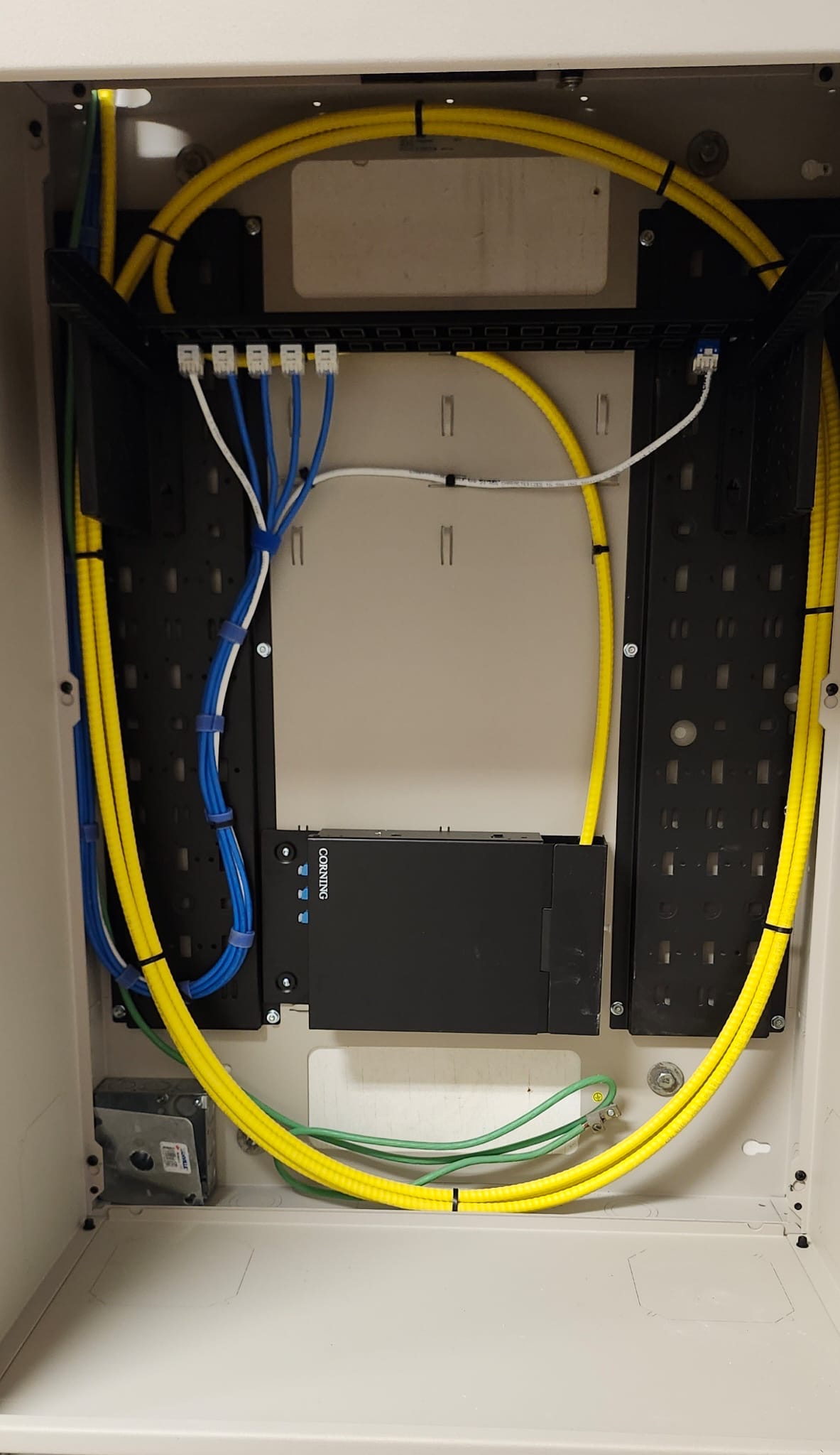
Fiber optic splicing, termination, and OTDR testing performed by KTS Solutions during a fiber backbone deployment
Fiber Optics

Fiber Backbone Deployment

Client
Industrial Facility Operator
Industry
Fiber Optics
Region
Alberta

The Challenge

Multiple buildings across the site were linked by copper runs at or beyond their distance limits. Throughput between buildings was constrained, links were unreliable in poor weather, and there was no headroom for planned camera and access control expansion.

Scope of Work

  • Backbone route design between buildings
  • Pathway, conduit, and fire-stopping coordination
  • Single-mode and multi-mode fiber placement
  • Fusion splicing and field termination
  • OTDR testing and certification of every strand
  • As-built drawings and test documentation

Technology & Services Used

  • Corning single-mode and multi-mode fiber
  • Fusion splicing and field termination
  • OTDR testing and certification of all strands
  • Pathway, grounding, and bonding to TIA/EIA and BICSI standards
  • Fire-stopping at all rated penetrations
  • As-built drawings and certified test results

The KTS Solution

KTS designed the backbone routes around existing pathways and site constraints, coordinating conduit, fire-stopping, grounding, and bonding with the other trades on site. Fiber was placed, fusion spliced, and terminated, then every strand was OTDR tested and certified before turnover — with results documented rather than simply confirmed verbally. Spare strand count was deliberately specified above immediate requirements so future cameras, access control, and additional switching could be added without another civil build.

Project Results

Inter-building distance and throughput constraints removed

Every strand OTDR tested, certified, and documented at turnover

Spare capacity built in for planned security and network expansion

Weather-related link instability eliminated on backbone routes

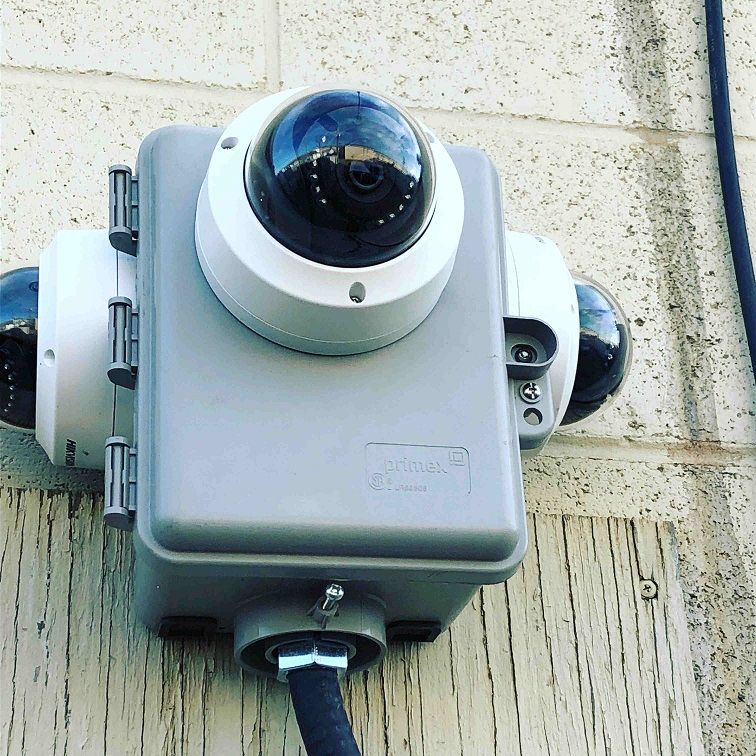
IP CCTV camera and integrated security system installation completed by KTS Solutions for a commercial property group
Integrated Security

Enterprise Security Deployment

Client
Commercial Property Group
Industry
Integrated Security
Region
Alberta and Ontario

The Challenge

Surveillance and door access were running as separate systems from different eras, managed building by building. Camera coverage had gaps at entry points, footage retention was inconsistent, and access credentials had to be administered separately at each property.

Scope of Work

  • Coverage assessment and camera placement design
  • IP camera installation and cabling
  • Recording, storage, and retention configuration
  • Access control at primary and secondary entry points
  • Credential and permission structure
  • Remote access, monitoring, and health alerting

Technology & Services Used

  • IP CCTV cameras with recording and retention configuration
  • Kantech and Inception access control
  • Alarm.com monitoring with cellular backup
  • Cat6 cabling and PoE switching
  • VLAN isolation of security systems
  • Remote access, VPN, and health alerting

The KTS Solution

KTS designed camera placement against actual sightlines and entry points instead of simply replacing existing positions, closing the gaps at doors and approaches. Surveillance and access control were brought together so door events and video correspond, and credentials were restructured so permissions are administered centrally rather than per building. Remote access and health monitoring were configured so camera and controller faults surface as alerts rather than being discovered when footage is needed.

Project Results

Coverage gaps closed at entry points and approaches

Surveillance and access control administered as one system

Credential management centralized across properties

Device and controller health surfaced through active alerting

Access control and low-voltage technology installation by KTS Solutions at a remote industrial site
Remote & Industrial

Remote Industrial Technology Deployment

Client
Major Canadian Oil & Gas Producer
Industry
Remote & Industrial
Region
Northern Alberta

The Challenge

A remote industrial site needed network, security, and access control work delivered under active operating conditions. Site access was permit-controlled, material deliveries were infrequent, and any missing part or uncertified technician meant losing days rather than hours.

Scope of Work

  • Pre-mobilization site assessment and permit planning
  • Advance material staging and delivery coordination
  • Structured cabling and network installation
  • Camera and access control installation
  • Certified testing and commissioning
  • Turnover documentation and as-built drawings

Technology & Services Used

  • Structured cabling certified to TIA/EIA and BICSI standards
  • Industrial-rated pathways, grounding, and bonding
  • IP cameras and Kantech access control
  • Fluke DSX1800 and OTDR certification testing
  • Site-specific safety, LOTO, and permit compliance
  • Complete turnover documentation package

The KTS Solution

Because the real constraint on a remote site is logistics rather than installation, KTS planned mobilization first — permits, site onboarding, safety orientation, and material staging arranged before crews travelled, with technicians already permit-trained for the site's requirements. Work was sequenced around live operations and hazard assessments, with daily coordination against the site's schedule. Everything was certified and documented on site, so the client received test results and as-built drawings at turnover rather than waiting for a follow-up trip.

Project Results

Work delivered around live operations without disrupting production

Permit, onboarding, and safety requirements met throughout

Certified test results and as-built drawings issued at turnover

Additional scopes awarded on the same site following delivery

KTS-Led Delivery. One Accountable Standard.

Projects are delivered through KTS teams and qualified regional resources operating under KTS project management, QA, documentation, and service standards.

Whichever resources are deployed to your site, KTS remains responsible for the final outcome — the design, the standard of installation, the certified testing, the documentation you receive at turnover, and the support that follows.

KTS Project Management

A single accountable point of contact from design through turnover.

KTS Quality Assurance

A lead technician per site holding work to one installation standard.

Certified Testing

Fluke DSX1800 for copper, OTDR for fiber — results documented, not assumed.

Turnover Documentation

As-built drawings and certified test results issued on completion.

Have a project like one of these?

Tell us the scope, the locations, and the timeline. We'll walk your requirements and come back with a deployment plan.

Stop Managing Technology Contractors. Start Managing Outcomes.

Whether you're upgrading one facility or standardizing technology across multiple locations, KTS can simplify the process by giving your organization one accountable technology partner.

Toll free (866) 526-1001|Existing client? Sign in to the Client Portal